Audit Timing

Many small associations ask how long an audit will take — this guide explains typical timeframes, what causes delays, and how to complete the process efficiently.
How Long Does an Audit Take for a Small Association?
One of the first questions committees ask is how long an audit will take — especially when working toward an AGM or reporting deadline.
The short answer is: it depends on how well your records are prepared.
Typical Audit Timing
For most small associations, an audit can be completed within 2 weeks once complete and accurate records are provided. In practice, delays usually occur before the audit even begins — not during it.
What Happens During an Audit?
Understanding the process helps explain the timing.
1. Initial Planning
We review your organisation, confirm the scope, and provide a clear list of the information required.
2. Fieldwork
This is where the audit work is performed, including:
Reviewing transactions
Testing key balances
Assessing financial controls
3. Finalisation
We complete the audit file and issue the audit report for presentation to your committee or members.
What Causes Delays?
In our experience, timing is mostly affected by the quality of information provided.
Common delays include:
Missing bank statements
Incomplete or unclear records
Delays in responding to questions
Issues identified late in the process
Good record-keeping is essential, as associations are required to maintain records that accurately reflect their financial position and transactions.
How to Speed Up the Audit Process
A smooth audit comes down to preparation.
You can significantly reduce timing by:
Preparing documents early
Ensuring records are complete and organised
Responding promptly to requests
Addressing issues before year-end where possible
Is a Review Faster Than an Audit?
Yes — in most cases, a review can be completed more quickly than a full audit. This is because a review involves fewer detailed procedures and provides a lower level of assurance compared to an audit.
For many smaller associations, a review may be a more efficient option depending on requirements.
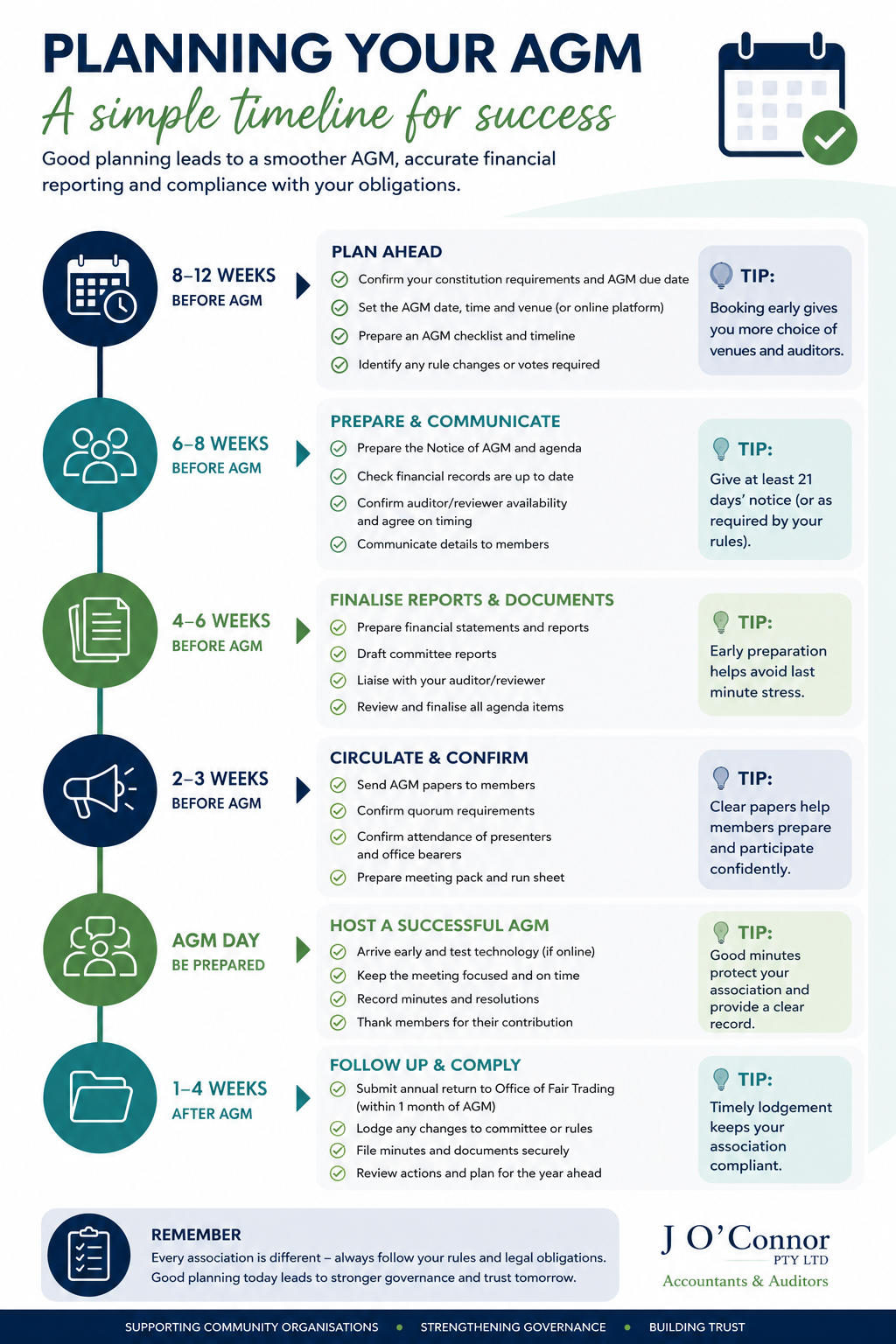
Planning Around Your AGM
Timing is particularly important when preparing for your Annual General Meeting.
Starting the process early ensures:
Reports are ready on time
Issues can be addressed without pressure
Your committee can present with confidence

The biggest factor in audit timing isn’t the auditor — it’s how prepared the association is.
With complete records and clear communication, the process can be efficient, straightforward, and completed well within expected timeframes.