Internal Controls and Gift Cards
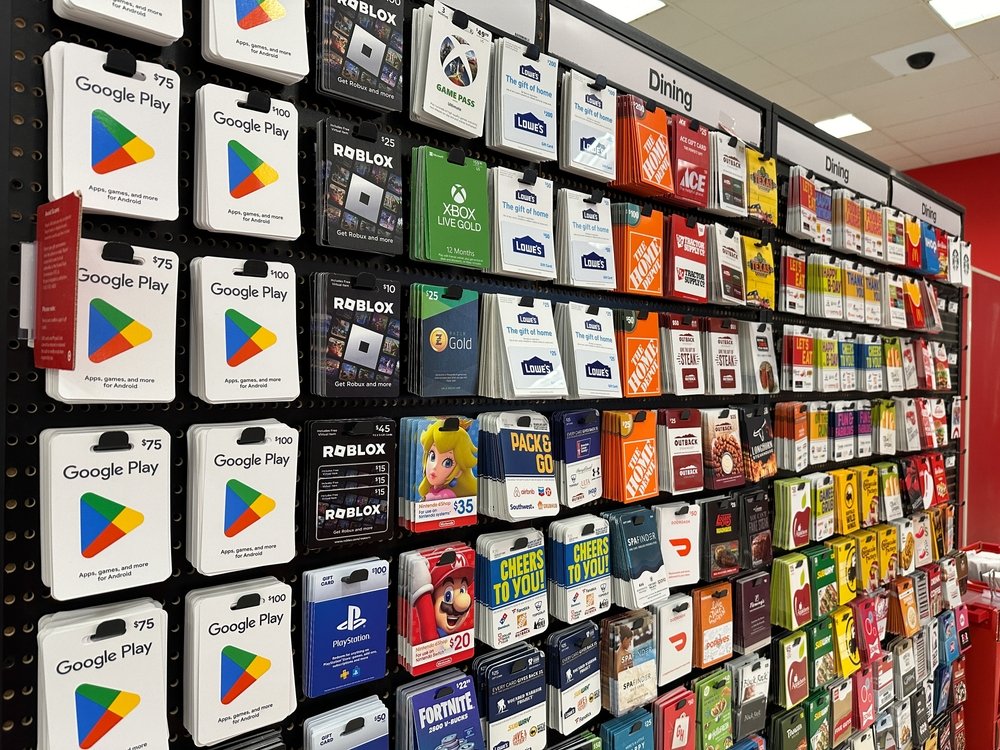
Many Australian charities and incorporated associations use gift cards to provide emergency assistance such as food, fuel and essential supplies to vulnerable people, but proper internal controls and documented policies are essential to comply with ACNC governance obligations and protect charity funds from misuse.
Protecting Your Charity While Helping People
Many Australian charities and community organisations issue supermarket, food, pharmacy or fuel gift cards to support vulnerable people. These programs can provide immediate assistance to people experiencing homelessness, domestic violence, financial hardship or food insecurity.
However, gift cards are effectively cash equivalents. Without proper internal controls, even well-meaning organisations can expose themselves to fraud, misuse, disputes, poor record keeping, or breaches of governance obligations.
The Australian Charities and Not-for-profits Commission (ACNC) expects charities to operate in an accountable and responsible way, particularly under Governance Standard 5, which requires Responsible People to ensure that the charity’s financial affairs are managed responsibly.
Strong internal controls are not about mistrust. They are about protecting:
the charity
volunteers and staff
donors and grant funding
vulnerable beneficiaries
the reputation of the organisation.
The Queensland incorporated associations guide also highlights the importance of proper accounting records, approvals, segregation of duties and responsible financial management.
Why Gift Cards Need Special Controls
Gift cards are useful because they:
allow immediate assistance
reduce the risks of carrying cash
can limit purchases to food or essentials
provide dignity and choice to recipients
simplify emergency relief distribution.
But they also create risks because:
cards can be lost or stolen
cards may be used for unintended purposes
volunteers may distribute cards without records
unused cards may not be reconciled
there may be no evidence the charity funds reached beneficiaries.
For auditors and Responsible People, undocumented gift card programs create significant governance and accountability concerns.
What Are Internal Controls?
Internal controls are the policies, procedures and processes designed to:
protect charity funds and assets
reduce the risk of fraud and error
ensure transactions are properly authorised
maintain accurate records
support accountability and transparency.
Even small charities should have basic controls appropriate to their size and operations.
Common Weaknesses Seen in Small Charities
Many small organisations unintentionally create risks through:
one person purchasing and distributing cards
no register of issued cards
handwritten notes with missing details
no approval process
no reconciliation of unused cards
cards stored in unlocked drawers
no review by the management committee
no documented policy.
These issues do not automatically mean fraud exists. Often they arise because volunteers are trying to help quickly during difficult situations. But weak systems can still create serious governance problems.
Simple Internal Controls Every Charity Should Consider
1. Maintain a Gift Card Register
Record:
date purchased
supplier
card number or reference
value
recipient initials or reference
purpose of assistance
staff or volunteer issuing the card
remaining unused cards.
2. Separate Duties Where Possible
Ideally:
one person approves purchases
another person distributes cards
another person reviews records.
Even in small charities, some independent oversight helps reduce risk.
3. Require Supporting Documentation
Keep:
purchase receipts for gift cards
committee approvals
reconciliation records
funding acquittal evidence.
4. Secure Physical Storage
Unused cards should be:
locked away
access restricted
periodically counted.
5. Regular Reporting to the Board or Committee
Management committees should receive periodic reports showing:
cards purchased
cards issued
remaining balances
unusual transactions or losses.
6. Adopt a Written Policy
A written policy helps:
volunteers understand procedures
maintain consistency
demonstrate compliance with ACNC expectations
support audit and grant acquittal requirements.
Why This Matters for ACNC Governance
The ACNC expects Responsible People to:
act with reasonable care and diligence
manage finances responsibly
identify and manage fraud risks
maintain accountability and public trust.
Poor controls over gift cards could potentially:
undermine donor confidence
affect grant funding
create reportable governance issues
expose committee members to criticism or disputes.
Good controls help charities demonstrate that funds are being used for charitable purposes and that vulnerable beneficiaries are being supported appropriately.
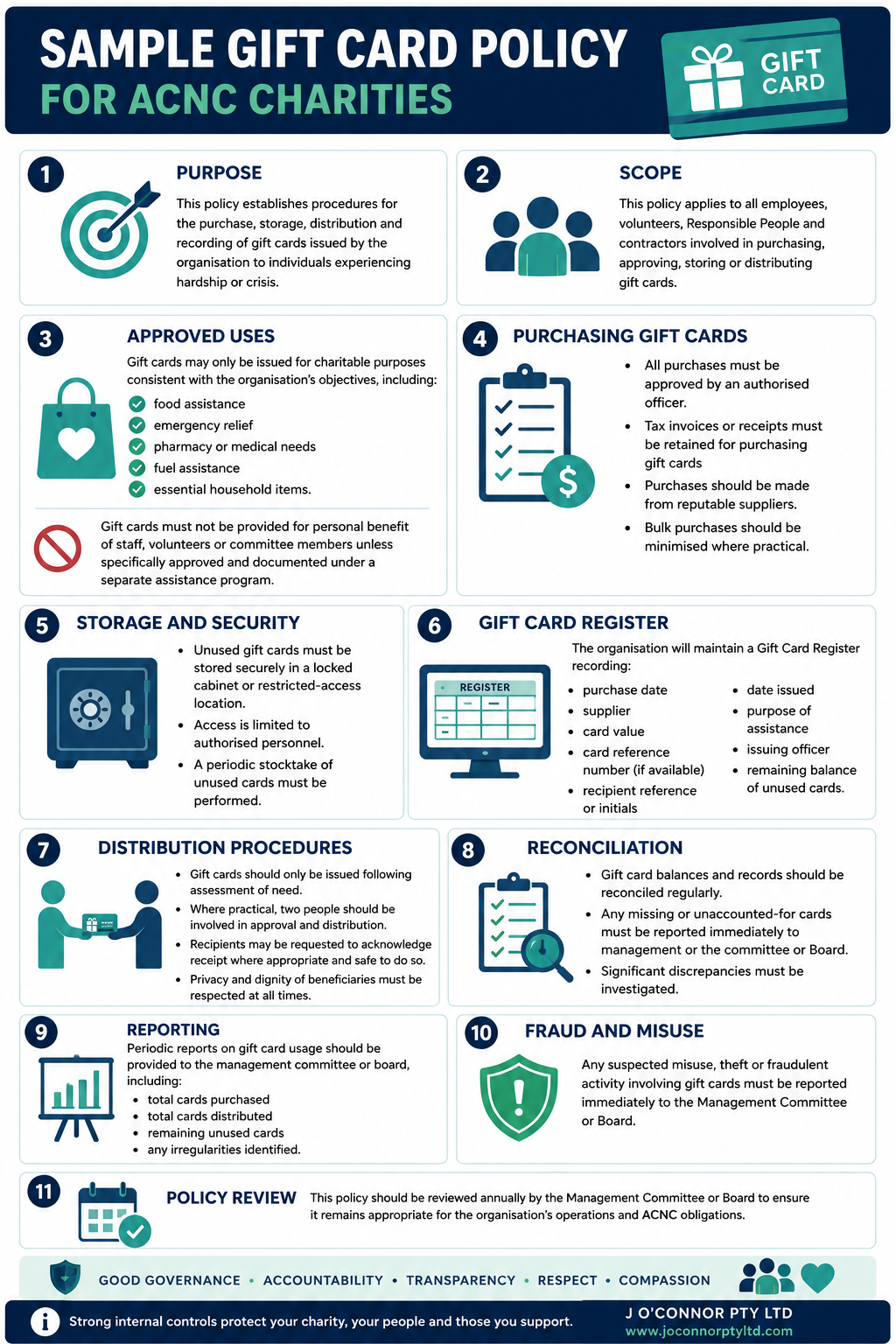

Many charities operate with limited resources and rely heavily on volunteers. The goal of internal controls is not bureaucracy for its own sake. It is about protecting charitable funds so they reach the people who genuinely need help.
Simple systems, clear documentation and regular oversight can significantly reduce risk while maintaining compassion and flexibility in service delivery.
For organisations using gift cards regularly, a documented policy and proper register are no longer optional best practice — they are an important part of responsible governance.
Sample Gift Card Policy for ACNC Charities
1. Purpose
This policy establishes procedures for the purchase, storage, distribution and recording of gift cards issued by the organisation to individuals experiencing hardship or crisis.
2. Scope
This policy applies to all employees, volunteers, Responsible People and contractors involved in purchasing, approving, storing or distributing gift cards.
3. Approved Uses
Gift cards may only be issued for charitable purposes consistent with the organisation’s objectives, including:
food assistance
emergency relief
pharmacy or medical needs
fuel assistance
essential household items.
Gift cards must not be provided for personal benefit of staff, volunteers or committee members unless specifically approved and documented under a separate assistance program.
4. Purchasing Gift Cards
All purchases must be approved by an authorised officer.
Tax invoices or receipts must be retained for purchasing gift cards
Purchases should be made from reputable suppliers.
Bulk purchases should be minimised where practical.
5. Storage and Security
Unused gift cards must be stored securely in a locked cabinet or restricted-access location.
Access is limited to authorised personnel.
A periodic stocktake of unused cards must be performed.
6. Gift Card Register
The organisation will maintain a Gift Card Register recording:
purchase date
supplier
card value
card reference number (if available)
recipient reference or initials
date issued
purpose of assistance
issuing officer
remaining balance of unused cards.
7. Distribution Procedures
Gift cards should only be issued following assessment of need.
Where practical, two people should be involved in approval and distribution.
Recipients may be requested to acknowledge receipt where appropriate and safe to do so.
Privacy and dignity of beneficiaries must be respected at all times.
8. Reconciliation
Gift card balances and records should be reconciled regularly.
Any missing or unaccounted-for cards must be reported immediately to management or the committee or Board.
Significant discrepancies must be investigated.
9. Reporting
Periodic reports on gift card usage should be provided to the management committee or board, including:
total cards purchased
total cards distributed
remaining unused cards
any irregularities identified.
10. Fraud and Misuse
Any suspected misuse, theft or fraudulent activity involving gift cards must be reported immediately to the Management Committee or Board.
11. Policy Review
This policy should be reviewed annually by the Management Committee or Board to ensure it remains appropriate for the organisation’s operations and ACNC obligations.