
You should resign from an incorporated association when you can no longer fulfil your duties, have a conflict of interest, or need to step down formally under the association’s rules and the Associations Incorporation Act.
Introduction
Resigning from an incorporated association is more common than most committees expect. It might be due to time constraints, disagreements, or simply moving on.
What matters is that the resignation is handled correctly. The rules are usually straightforward, but they are often misunderstood.
What Do the Rules Say About Resignation?
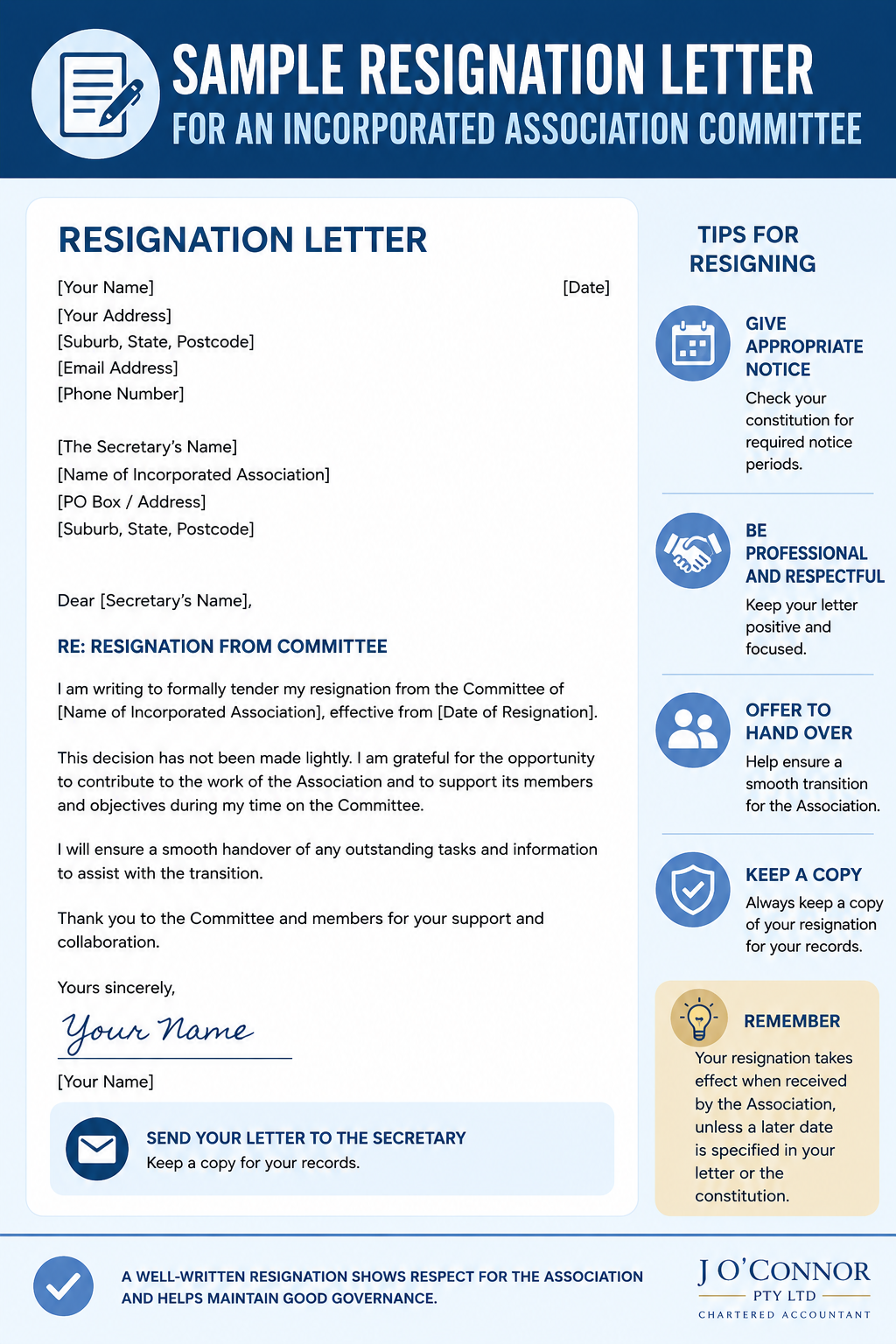
Under the standard model rules, a committee member can resign by giving written notice.
A member of the management committee may resign from office by giving written notice to the secretary. The resignation takes effect when the notice is received, or at a later date stated in the notice.
👉 In practice, this means:
You must resign in writing
The resignation is effective immediately (unless you specify otherwise)
The secretary should record the resignation in the minutes
When Should You Resign from an Incorporated Association?
There is no single rule, but common situations include:
1. You Can No Longer Perform the Role
Time commitments
Work or personal changes
Inability to attend meetings
👉 Staying on the committee without participating can create governance risks.
2. Conflict of Interest
If your personal or financial interests conflict with the association:
It may be appropriate to step down
Especially if the conflict is ongoing
3. Disagreements with the Committee
Disagreements are normal, but if:
You cannot support decisions
Governance breaks down
👉 Resignation may be the practical outcome.
4. Change in Circumstances
Examples:
Moving location
Health issues
Other commitments
What Happens After You Resign?
Once your resignation is submitted:
It takes effect immediately (or as stated)
The committee can appoint a replacement to fill the vacancy until the next AGM
Your responsibilities as a committee member end
👉 However:
You should ensure a proper handover
Provide any documents or information held
Common Mistakes to Avoid
❌ Verbal Resignations
Not valid under most rules — must be in writing.
❌ Delaying Resignation
If you know you cannot act properly, delaying creates risk for the association.
❌ Not Recording the Resignation
The resignation should be:
Noted in minutes
Reflected in records
Practical Tip
Keep it simple.
A resignation letter only needs:
Your name
The role you are resigning from
The effective date
Your signature
FAQs
Can a committee member resign immediately?
Yes. Under standard rules, resignation takes effect when the written notice is received, unless a later date is specified.
Do you need approval to resign from a committee?
No. Resignation is a unilateral decision. The committee does not need to approve it.
What happens if a committee member resigns?
The committee can appoint a replacement to fill the vacancy until the next annual general meeting.
Do responsibilities continue after resignation?
Your formal role ends, but you should ensure a proper handover and return of records.

Resigning from an incorporated association is not complicated, but it should be done properly.
The key points are simple:
Put your resignation in writing
Be clear about the effective date
Ensure the committee records the change
Most importantly, stepping down at the right time is part of good governance. It allows the association to continue operating effectively and ensures that responsibilities are carried out by active committee members.